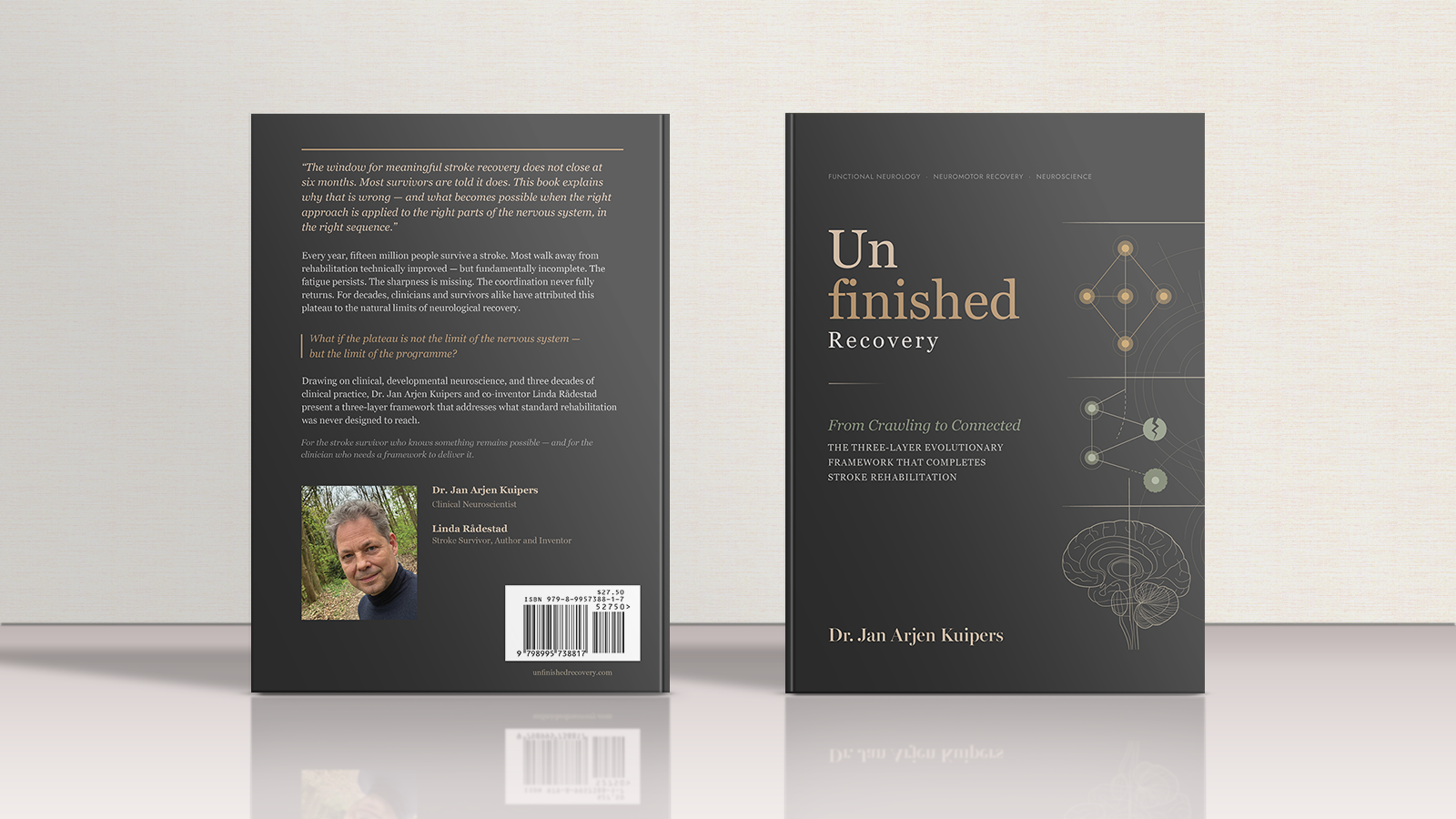
What if the plateau is not the limit of the nervous system, but the limit of the programme?
Your recovery didn't end. It was discontinued.
If you have survived a stroke, there was almost certainly a moment when the daily, expert support stopped — and you were left with a sheet of exercises and silence. You were told you had plateaued. Perhaps you were told the window had closed.
Here is what nobody told you: the window you were told had closed was never the biological window. It was the funding window. Rehabilitation ended where the programme ended — not where your brain's capacity for change ended. The neuroscience of plasticity does not recognise that cut-off point.
We call that moment the discharge cliff. The system that saved your life was built to manage a crisis, not to complete a recovery — and the people in it cared, but the design stops at the cliff edge. On the far side of it are the questions no one answered: why you are still so exhausted, why the world feels too loud, why your own brain seems to work against itself. These are not personal failures, and they are not mysteries. They are explainable, addressable features of a nervous system that was never given the conditions to finish reorganising — a system that learned to compensate, when what it deserved was to recover. Compensation passes every standard test. It is not the same thing as recovery.
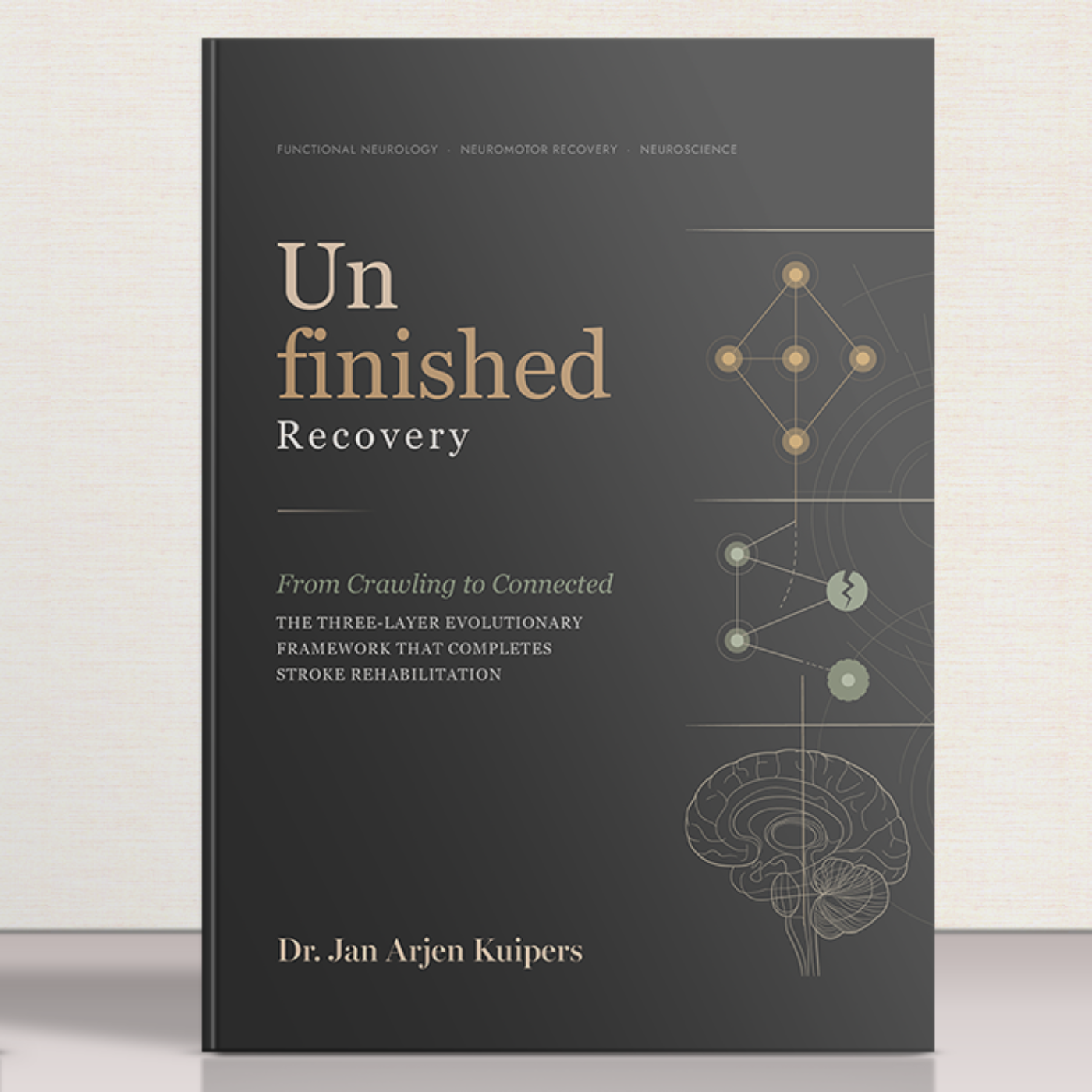
Unfinished Recovery is the work that begins where the programme ended. A three-layer framework, grounded in published neuroscience, co-created by a clinical neuroscientist and a stroke survivor — built for the ninety million people worldwide living after stroke who deserve to know what remains possible.
The cliff was never the end of the story. It was the end of the funding.
Your recovery is unfinished. Finishing it is the work